
Guides · Cycling in Taiwan
Flying a Bike from Korea to Taiwan, Baggage Rules and What It Actually Costs
Incheon or Busan to Taipei or Kaohsiung is barely over two hours and the fares are often cheap. But the cost of checking a bike can exceed the ticket itself. The reason is that carriers price it on fundamentally different logic. Some stack a "special item" fee on top of per-kilo excess weight, while others charge a flat amount per item regardless of weight. This guide sets out the current rules and figures taken from each airline's own site, how the charges actually compound, which threshold trips people up most often, and one rarely-mentioned limit that matters enormously to a group. There is a cap on how many bikes a single flight will carry.
Three pricing logics, not three prices
Air Busan stacks its charges. Sports equipment costs KRW 10,000 per set (about NT$250), and one bicycle counts as one set. But that fee has nothing to do with weight. The international free allowance is 15 kg, and anything above it on Taiwan routes is billed separately at KRW 15,000 per kilo. In practice a road bike plus a hard case often lands between 15 and 20 kg, and adding a normal suitcase easily pushes you a dozen kilos over. At that point the expensive part is the excess weight, not the KRW 10,000.
Jeju Air also charges for sports equipment separately. KRW 20,000 at the airport, but KRW 15,000 if bought online. A 25% discount, payable up to 24 hours before departure. T'way runs on a third logic entirely. A flat KRW 20,000 per special-baggage item on international routes (NT$600 / US$20), and its site states explicitly that this is charged regardless of the free checked allowance. Refunds are only processed at the airport where you paid. Korean Air's bicycle rate could not be retrieved from its site for this guide, so confirm directly with the airline's reservation centre before you fly rather than extrapolating from the others.
Size trips people up more often than weight
The cap on combined dimensions. Length plus width plus height. Differs by airline, and this is the threshold people overlook most. Air Busan classes anything over 203 cm combined as oversized and bills it separately. T'way caps special baggage at 277 cm combined and refuses to check any item reaching 32 kg or 277 cm at all, sending it to air cargo instead. Jeju Air is the most generous at 292 cm. The same bike case can therefore be charged normally, charged an oversize fee, or refused outright depending on which airline you booked.
Packing requirements are not merely advisory either. Both Air Busan and Jeju Air state on their sites that pedals must be removed, the handlebar secured, and the bike packed in a dedicated hard case with built-in padding; sports equipment not packed to spec may be refused, and even if accepted, damage is not compensated. T'way accepts either a hard case or a heavy cardboard box. Separately, engine-powered bicycles, scooters and similar equipment with fire or explosion risk cannot be checked at all and must travel as air cargo. Rules for electric-assist bikes vary by carrier because of lithium battery limits, so if you plan to bring one, confirm with the airline before booking rather than at the counter.
How many bikes fit on one flight? Groups need to ask this first
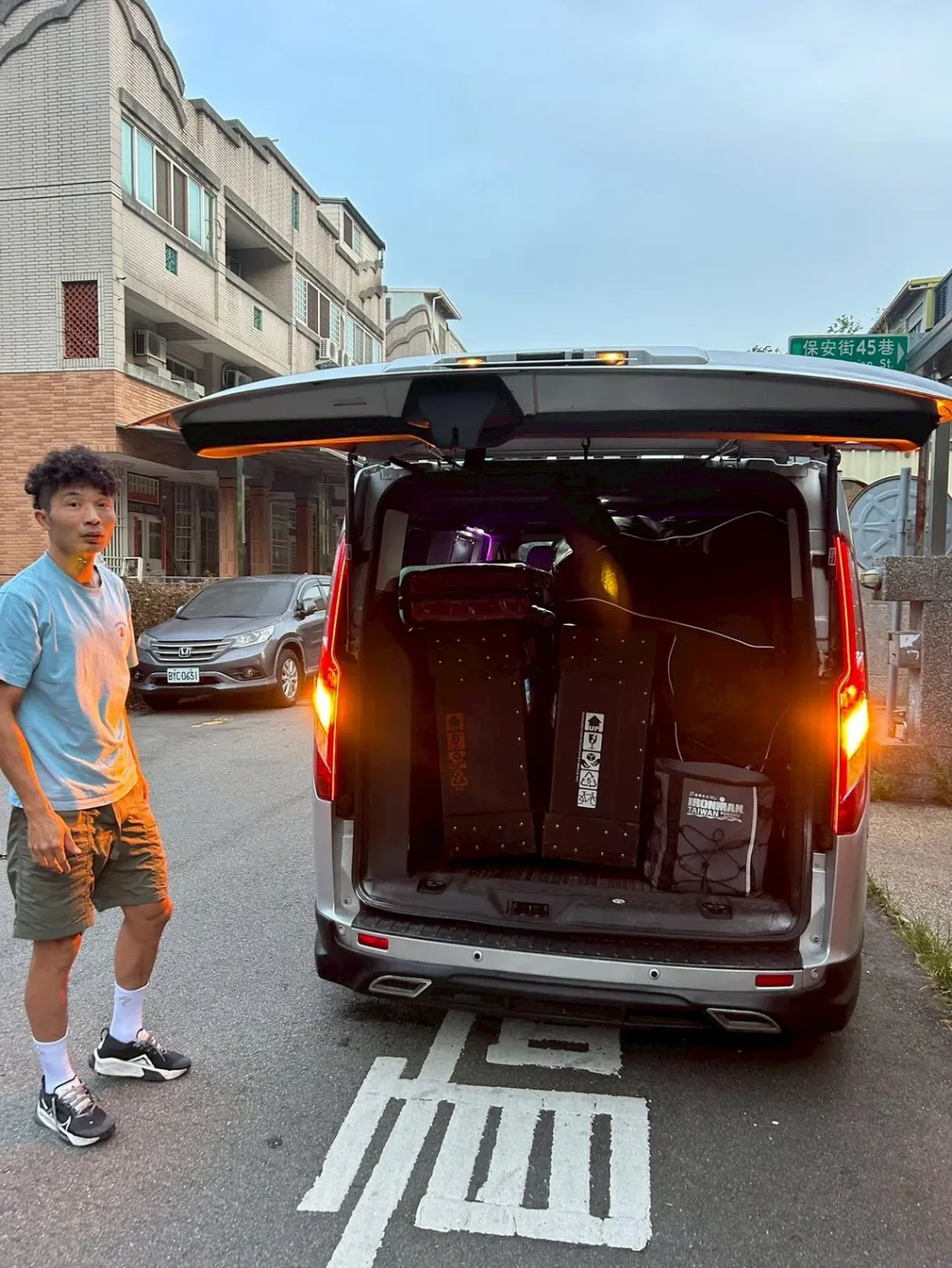
T'way's site spells out a limit that rarely gets mentioned. On international routes, a single flight carries a maximum of 7 bikes packed in cardboard boxes or 15 packed in soft bike bags, with anything beyond that potentially refused and the figure adjusted downward according to conditions on the day. That means a team of eight to twelve riders all using cardboard boxes simply will not fit on one aircraft. This is not a cost problem, it is a space problem.
There are three practical responses for a group. Declare the number of bikes to the airline at booking and get it confirmed, rather than finding out at check-in. Switch to lower-volume soft bike bags to raise the number that fit. Or split the team across two departures. Whichever you choose, this has to be settled before tickets are bought. Once everyone is booked on the same flight, there is very little room to fix it. Other carriers may not publish the same figure, but the physical limit on hold capacity exists regardless, so it is worth asking before booking.
After landing in Taiwan, and the day you fly home
A bike box normally comes out on the ordinary baggage carousel. There is no special collection lane. So just follow the terminal signage after clearing customs, or ask ground staff. What genuinely needs planning ahead is the return leg. Taoyuan Airport's self-service baggage kiosks only handle standard-sized luggage; a bike box or bike bag is rejected by the system outright and has to go through a staffed airline check-in counter instead. The location of the oversized-baggage counter varies by carrier, so allow more check-in time on departure day than an ordinary passenger would.
The return leg usually adds two more things. The parts and souvenirs bought in Taiwan, and repacking a bike that was unpacked on arrival. Think about packing materials in advance. If you flew out with a reusable soft bike bag, simply reusing it is by far the easiest option; if you came with a cardboard box, that box was most likely discarded at the start line and you will need to source another one in Taiwan. All of this weight and volume feeds straight back into the excess-weight charges described earlier. Worth calculating how many kilos of allowance you have left before the souvenir shopping starts.
FAQ
Which airline is cheapest for carrying a bike?
There is no single answer, it depends on your total weight. If you travel light, Air Busan's KRW 10,000 sports equipment fee is the lowest headline figure; but once you pass the 15 kg free allowance, KRW 15,000 per kilo on Taiwan routes escalates the total fast. T'way's flat KRW 20,000 per item is charged regardless of the free allowance, which is simpler when your total weight is high. Jeju Air's online pre-purchase at KRW 15,000 carries a 25% discount. Compare using "special item fee + estimated excess kilos × per-kilo rate" rather than the headline number alone.
What does Korean Air charge for a bike?
We were unable to retrieve Korean Air's bicycle rate and size rules from its own site while compiling this guide, so we are not listing a figure here. Extrapolating from other carriers would be wrong. Contact Korean Air's reservation centre (1588-2001) directly to confirm the fee, the combined-dimension cap, and whether advance registration is required. The same applies to Asiana, which has been absorbed into the Korean Air group and whose rules may still be consolidating.
Do I need a hard case, or will a cardboard box do?
It depends on the airline. Air Busan and Jeju Air both specify a "dedicated hard case with built-in padding" on their sites, and note that equipment not packed to spec may be refused, with no compensation for damage even if accepted. T'way explicitly accepts either a hard case or a heavy cardboard box. The common requirement across all of them is removing the pedals and securing the handlebar. A cardboard box carries a second cost too, volume. T'way's per-flight cap is 7 bikes in boxes versus 15 in soft bags, so a group using boxes is narrowing its own choice of flights.
Do these fees change every year?
Yes. A concrete example, Air Busan's excess weight charge on Taiwan routes was KRW 9,000 per kilo a few years ago and is now KRW 15,000, with the site noting it applies "to tickets issued from 8 September 2025". Roughly a 60% increase over that period. The figures in this guide are taken from each airline's current published rates, but fares and baggage fees are adjusted often, so check the airline's own current notice before booking.
Sources
Rules and road conditions change — always check the official announcements before you travel.
Related guides
- Getting from Taoyuan Airport to the Ten-Day Traverse Start Line in Kaohsiung
- Bring Your Bike to Taiwan|Airline Baggage Rules
- TPE Taoyuan Airport Bike Pickup & Transfer
Elsewhere in the ecosystem
- gear · Bike Maintenancereads your Strava mileage and works out when chains, tyres and pads are due
Need a support vehicle?
Tell us your plan and we will suggest an option based on group size, bike count, and days.