
Guides · Cycling in Taiwan
Flying to Kinmen With Your Bike|Baggage Rules, Fog Season, Routes
Kinmen is flat, quiet on the roads, and close enough that Taiwanese riders think about bringing their own bike. Booking the seat is the easy part. The bike is the piece that takes time, because the two airlines flying there ask for different things at different moments. This guide collects what Mandarin Airlines and UNI Air publish about carrying bicycles, the size and weight limits posted by Kinmen Airport, how the March-to-May fog season can rearrange a trip, what the fares, the excess baggage charge and the Golden Lake Hotel's published rates actually add up to, and the five cycling routes mapped by the Kinmen County Government. At the end, what 24EZGO can actually handle, which is the Taiwan side. We have no vehicle and no crew on Kinmen.
Two Airlines Fly There, on Two Different Clocks
Kinmen Airport lists two carriers on its scheduled-flight page, Mandarin Airlines and UNI Air. The moment you book, you have chosen which set of bicycle rules applies to you.
Mandarin Airlines states it plainly. You must inform its customer service of the packed weight and dimensions no later than 48 hours before departure. UNI Air puts the deadline earlier still. Because each flight can only carry a limited number of bicycles, it asks you to report weight and dimensions when you make the reservation. Same task, two clocks. One counts down from two days before the flight, the other starts running the moment you book.
Both mention a cap on how many bikes a flight can take. That makes the bicycle something other than a bag that automatically travels with you. It queues separately. The outbound and the return are two different flights and each needs its own registration, and the return leg is the one that gets forgotten in the rush before departure.
How Big the Box Can Be, According to the Posted Numbers
Kinmen Airport's page on domestic checked baggage lists the general limits for both carriers. UNI Air splits them by aircraft type. The ATR-72 takes 138 cm wide by 157 cm high, the A321 takes 202 cm by 185 cm, with a 30 kg weight limit. Mandarin Airlines states a combined length plus width plus height of no more than 180 cm, limited to 32 kg. That page was last updated on 21 March 2025.
A bicycle does not travel under those numbers. It is special checked baggage. Mandarin Airlines publishes a separate set for bikes. Each checked piece may not exceed 160, 40 and 143 cm in length, width and height respectively, and a single packed piece may not exceed 32 kg, above which it must be split. That is far more generous than the 180 cm combined limit for ordinary bags, because the two go through different approval paths in the first place.
There is one thing we deliberately will not do, which is add and subtract these figures for you to work out whether your box fits. The actual cargo door opening, the aircraft assigned that day, and what the ground staff make of it on the spot are not settled by arithmetic. Report the three dimensions of your box and its weighed mass to the customer service line and let them tell you whether they can take it. That is what the published rule is actually asking you to do.
Packing and Deflating, Exactly as Both Airlines Wrote It
Mandarin Airlines sets out its packing requirements on its own special baggage page. Before checking a bicycle, the handlebar must be turned 90 degrees and secured, the pedals fixed inward or removed, the tyres deflated to release pressure, and the outer packaging must be of a material that protects the bike properly.
UNI Air words it differently. Use a dedicated transport bag or seal the bike in a carton, a hard case being best, and deflate the tyres to a non-saturated state.
The two describe the tyres in different terms. Mandarin says release the pressure, UNI Air says deflate to a non-saturated state, which means bring the pressure down and leave room for expansion rather than empty the tyre completely. Tubeless riders should be careful here. Dumping all the air at once can unseat the bead, and sealant can weep out. Down to well below riding pressure, soft to the touch, already meets what the rule asks for.
Put a pump in your luggage. Once you land on Kinmen, restoring that pressure is your own job and nobody else does it for you.
The Batteries Cannot Ride in the Hold With the Bike
Mandarin Airlines puts it bluntly. Peripheral electronic devices containing lithium batteries or power banks, such as lights and cycle computers, may not be checked along with the bike. Leaving the lights and the head unit clipped on while you box the bike is itself a breach of the rule.
UNI Air is equally clear. Spare lithium batteries, power banks included, may not be placed in checked baggage. Each passenger may carry up to 20 in the cabin, individually protected against short circuit. They may not be used or charged at any point during the flight, and power banks and spare batteries should not go in the overhead bin.
On packing day, strip the lights, the computer, the radar tail light and the power bank off the bike, wrap each one, insulate the contacts, and put them in your cabin bag. This is the step most often missed, because those things live on the bike and after a while they read as part of it.
Two more items sit outside what this guide can answer. A CO₂ cartridge is compressed gas and falls under dangerous goods rules, so whether you may carry one and how many is a question for the airline. Without that confirmation, leave it behind and bring a hand pump. An e-bike battery usually carries far more capacity than the allowance for ordinary personal electronics and cannot be checked as if it were a plain bicycle, so give the airline the battery model and its watt-hour rating before you buy the ticket.
The Fog From March to May Is the Harder Problem
Kinmen's weather station says the fog season begins in March and that dense fog can linger, with the March to May window dominated by advection fog formed as a cool current off the northern Chinese coast meets southerly winds. A second kind forms ahead of an approaching front, when warm moist air condenses readily.
This is not an abstract risk. On 2 March 2026, poor visibility on Kinmen cancelled 26 flights and affected 2,077 passengers. The fog lifted the next day and flights returned to normal.
For an ordinary traveller, a grounded flight means a rebooking and one more night. For someone travelling with a bike the trouble comes afterwards. Your bike is already stripped and boxed, the box is either with you or at the airport, moving to a later flight means confirming a bicycle slot all over again, and the return flight faces the same odds of fog. On a three-day itinerary with no slack, a single cancellation eats most of the riding.
There is not much you can do, but what there is works. Avoiding March to May is the most direct option. If you must go during the fog season, put the return flight in the afternoon of the last day rather than early morning, check live flight status from Kinmen Airport before you leave, and accept in advance that you may stay an extra night, which means asking about cancellation terms before you book the room.
What the Trip Actually Costs
Start with the airfare. Mandarin Airlines publishes full one-way fares of NT$2,459 including tax from Taipei to Kinmen (NT$2,342 excluding tax), NT$2,286 from Taichung, and NT$2,261 from Kaohsiung, effective from 31 December 2024. Kinmen Airport separately notes that domestic fares are deregulated, with carriers pricing by market segment and discounts reaching as low as 52% of the full fare. The full fare is the ceiling and 52% is the floor, so one person one way lands somewhere around NT$1,300 to NT$2,500. The islander subsidy requires a national ID or household certificate and does not apply to ordinary travellers.
The line most often left out of the sum is the excess baggage charge. The free allowance is only 10 kg, a bike in its box will almost certainly exceed that, and the excess is billed at the published freight rate. The heading on the Mandarin Airlines rate page states that it applies to excess baggage. Taipei to Kinmen is NT$18 per kg, Kinmen back to Taipei NT$17, Taichung to Kinmen NT$17 and NT$16 returning, Kaohsiung to Kinmen NT$17 and NT$16 returning. UNI Air lists Taipei to Kinmen at NT$18, Taichung at NT$16, Kaohsiung at NT$17, with Kinmen to Taipei NT$17 and Kinmen to Kaohsiung NT$16.
The same page states two more things that change what you pay. Anything under 10 kg is billed as 10 kg, and volumetric weight is length times width times height divided by 6,000, with the charge based on whichever is greater, actual or volumetric. A bike box is exactly the shape that suffers here, large in volume and light on the scale. Take a hard case of 120 by 80 by 30 cm and the volumetric weight is 48 kg, so even at an actual 20 kg the chargeable weight may still be 48. After the 10 kg allowance, 38 kg at NT$18 is NT$684 outbound from Taipei and NT$646 at NT$17 on the way back, NT$1,330 per person round trip. Four people with four bikes reach NT$5,320 on this line alone.
That formula is printed on the Mandarin Airlines published rate page, and that page does state it applies to excess baggage, but we did not find wording that says excess baggage is always billed volumetrically. When you report the dimensions and weight to customer service, ask them to confirm the chargeable weight for your box. That one call saves more than you would expect.
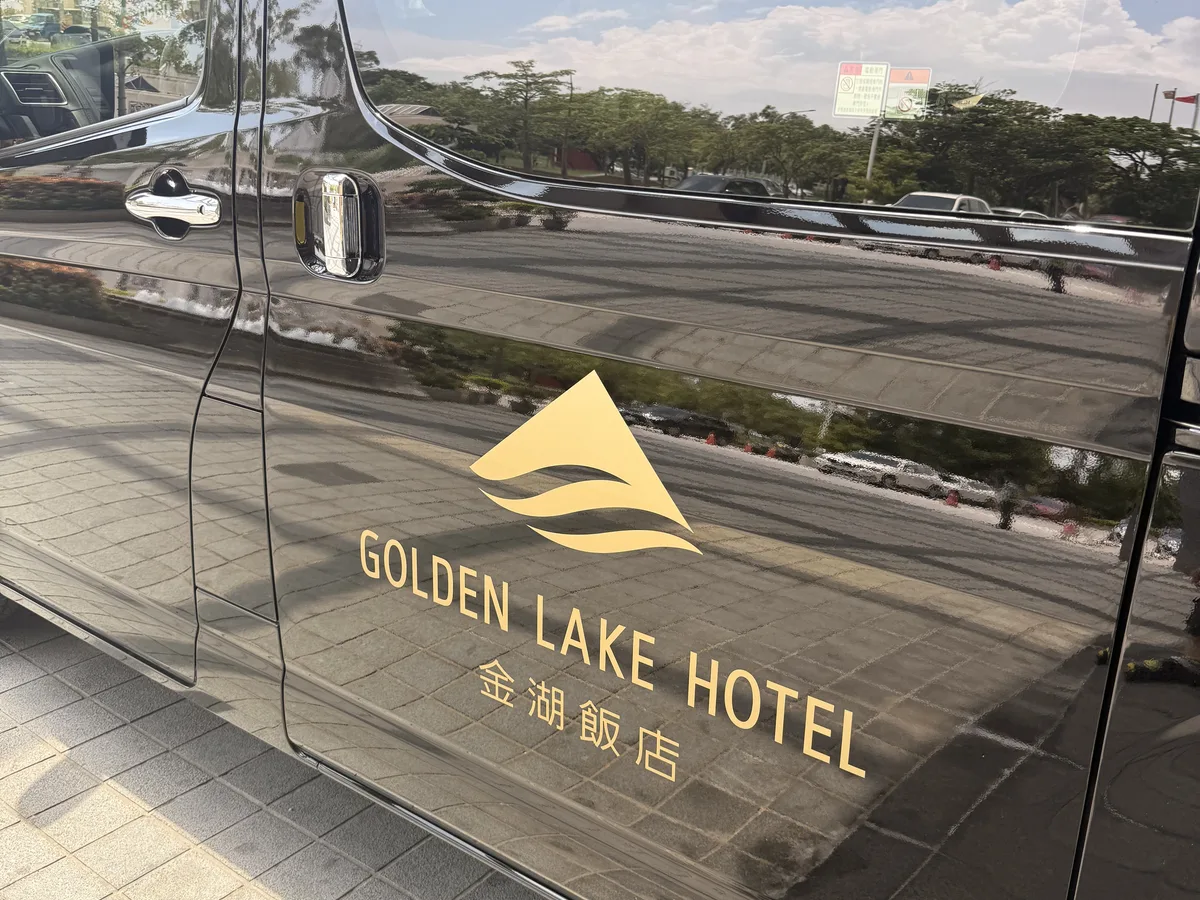
For lodging, take the Golden Lake Hotel as the worked example. Its official booking system lists the packages below. These were the published prices on 7 September 2026, not rates we negotiated. Packages get withdrawn and prices move with the calendar, so the hotel’s own reply at the time of booking is what counts.
For a party of four, the three-day two-night package at NT$12,500 for four is worth asking about first, because it states no surcharge for extra guests. Booking two double rooms on the annual package instead starts at NT$4,600 per night without breakfast, which is NT$18,400 for two rooms over two nights. Lower again is the mystery room type at NT$3,999 per night for two, at the cost of not choosing the room and having no breakfast. The annual package and the weekday offer both state that airport shuttle is included, which is a real line item when you arrive with four bike boxes. The green mobility package includes a Giant e-bike tour, which is of no use to anyone who flew their own bike over, so there is no reason to pay for it.
Stacking those together, four people with four bikes flying from Taipei and staying two nights at the Golden Lake Hotel comes to roughly NT$10,400 to NT$19,700 in airfare, about NT$5,300 in excess baggage, and lodging from NT$12,500, for a total of roughly NT$28,000 to NT$38,000. That range excludes meals, local transport on Kinmen, admission fees, and the cost of the bike box itself.
- Annual package without breakfast, from NT$4,600 per night, airport shuttle included
- Annual package with breakfast, from NT$5,500 per night, breakfast, vouchers and airport shuttle
- Weekday offer, Sunday to Thursday, from NT$4,700 per night, breakfast, executive lounge and airport shuttle
- Mystery room type, NT$3,999 per night for two, no breakfast
- Three-day two-night package, from NT$12,500 for four, no surcharge for extra guests
- Green mobility package, three days two nights, from NT$6,000 per night, Giant e-bike tour included
Where to Ride on Kinmen, and What We Handle on the Taiwan Side
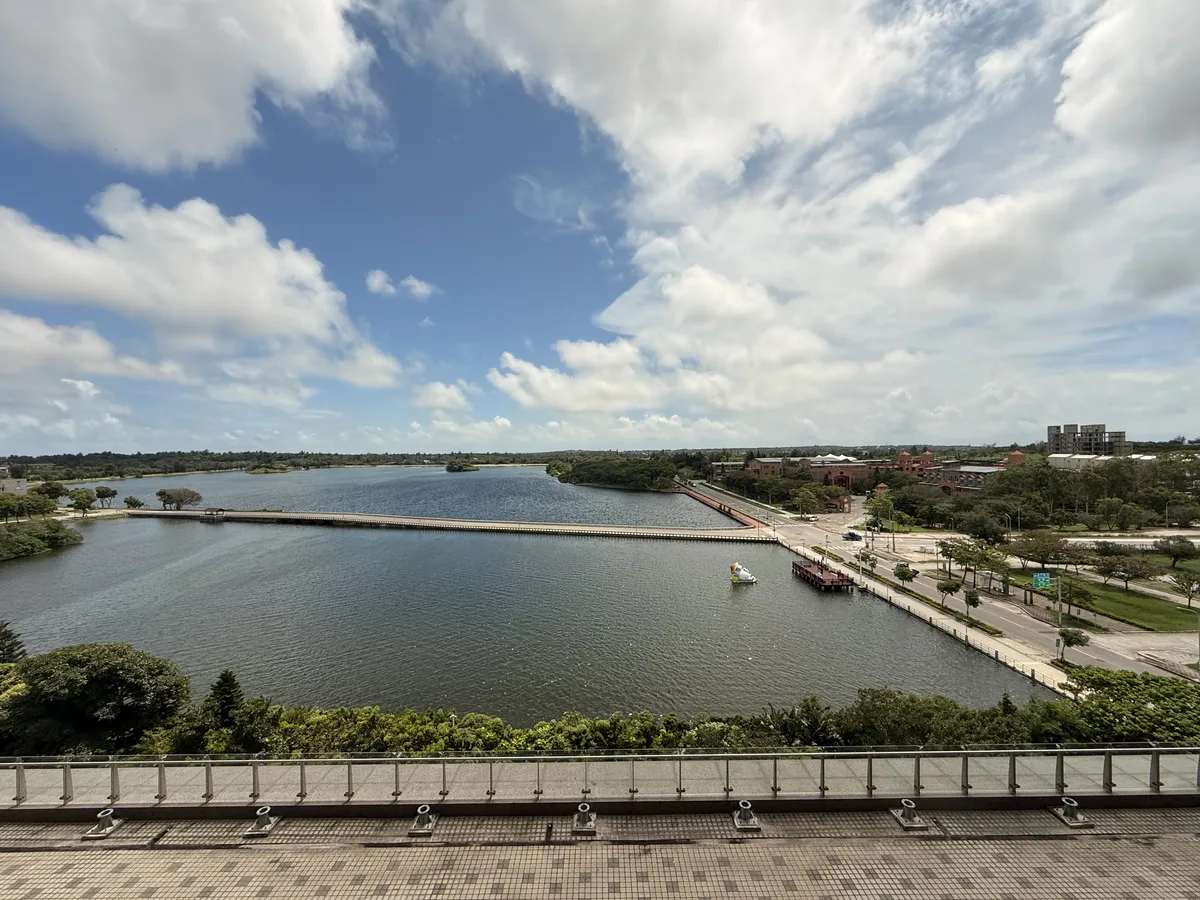
The Kinmen County Government maps five cycling routes on its tourism site, one per township. Jincheng's historic sites route runs 13.1 km past Juguang Tower, the Koxinga Shrine, Kinmen Old City and the Wentai Pagoda. Jinhu's lakes and hills route runs 15.9 km past the agricultural research station, Yangming Lake and Tai Lake. Jinsha's greenery route runs 16.8 km past the Shanhou Folk Culture Village, the sweetgum woods and the sorghum fields. Jinning's battlefield route runs 14.8 km past the Guningtou Battle Museum, the Cihu observation deck and the Shuangli wetland. Lieyu's exploration route runs 18.5 km past General Fort, Tiehan Fort, the Hujingtou Battle Museum and Lingshui Lake. Jinning also holds the 6.55 km Zhongshan Forest bike path, split into general, challenge and hazard grades.
Together those five come to 79.1 km, and the longest single route is 18.5 km. They are designed by district rather than as one loop around the island, and an itinerary should be planned at that scale. Riders used to centuries can string two or three together into one day and give the rest of the time to the forts and the villages.
Anyone who would rather not fly the bike over has rental options on the island. The county tourism site lists the Merida and Giant stores on Kinmen, and free rental at the national park Lieyu station against a deposited ID.
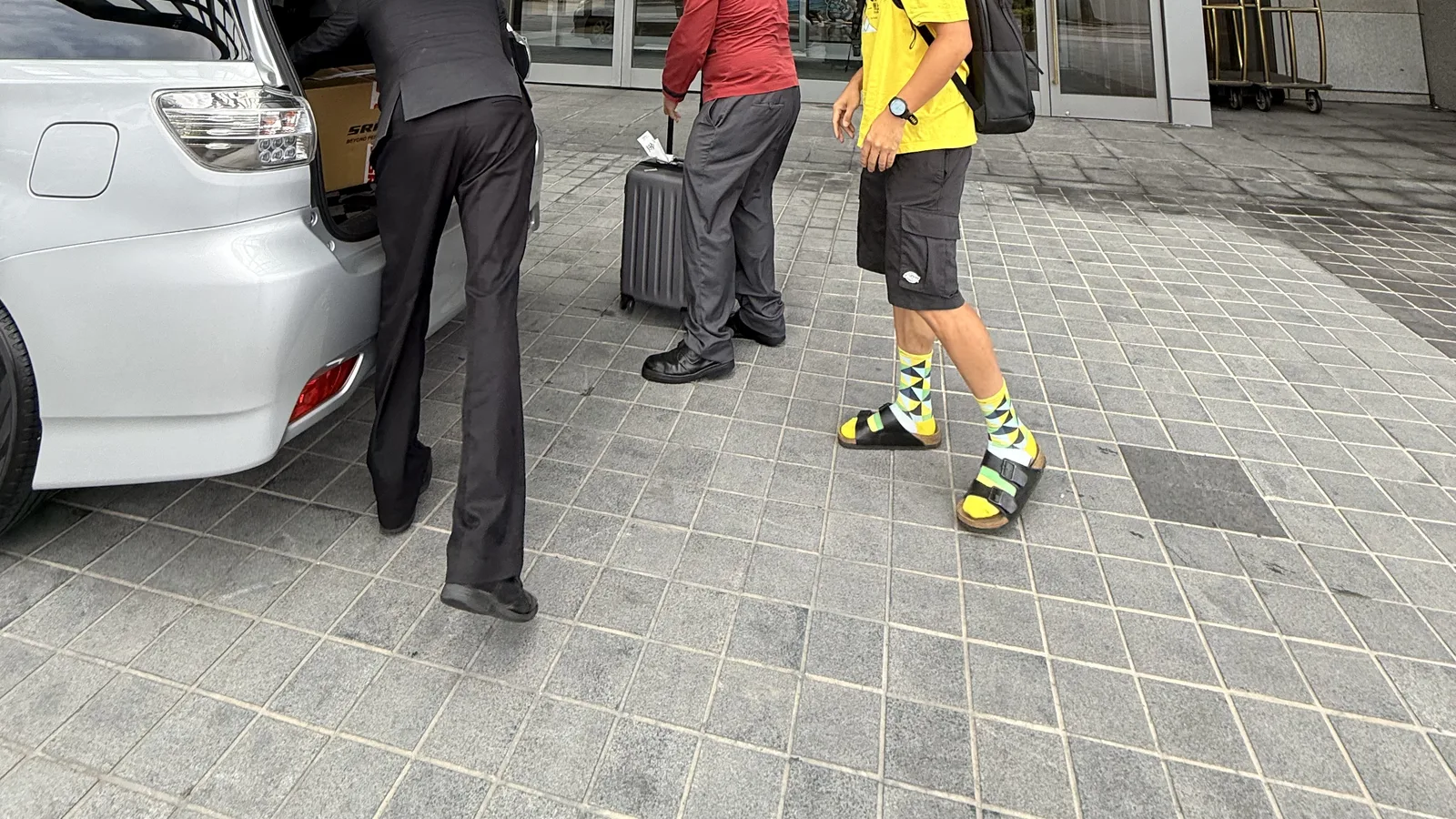
We have no vehicle and no crew on Kinmen, and we will not pretend otherwise. What belongs to us on this trip is the Taiwan side. Moving people, boxed bikes and luggage from home or hotel to the departure airport, and back again on return, is the airport bike transfer service we already run. A boxed bike is bulky, and four people with four bike boxes is not a load an ordinary taxi takes. That is the reason the service exists.
Domestic Bike Baggage Check
Enter the dimensions and weight of your bike box and this tool runs it against the rules both carriers publish, then lays the packing steps out as a list you can tick off. Every threshold and rate here comes from the airlines themselves. What you actually pay is settled at the counter.
Size and cost estimate
Fill in the four fields above to see the result
- Dimensions
- —Mandarin Airlines publishes 160, 143 and 40 cm for bicycles. Your three figures are sorted largest first before comparing.
- Piece weight
- —A single packed piece may not exceed 32 kg, above which it must be split
- Volumetric weight
- —Length times width times height divided by 6,000
- Chargeable weight
- —The greater of actual and volumetric weight, with anything under 10 kg billed as 10 kg
- Estimated excess charge
- —Chargeable weight less the 10 kg allowance, times the rate for that route
Packing steps
0 / 10 done
This covers domestic flights between Taiwan and Kinmen only. International rules differ and do not carry over.

FAQ
Once I have the ticket, can I just bring the boxed bike to the airport?
No. Both airlines require advance registration, and their deadlines differ. Mandarin Airlines wants the packed weight and dimensions no later than 48 hours before departure. UNI Air wants weight and dimensions at the time of booking, because each flight can only carry a limited number of bicycles. The outbound and return are two flights and each needs its own registration.
Do the tyres have to be completely flat?
The two use different wording. Mandarin Airlines says the tyres must be deflated to release pressure. UNI Air says deflate to a non-saturated state, meaning bring the pressure down and leave room for expansion rather than empty the tyre. On a tubeless setup, dumping all the air at once can unseat the bead and let sealant weep out, so well below riding pressure is enough. Bring it back up with a hand pump after you land.
Can the lights and cycle computer stay on the bike and be checked with it?
No. Mandarin Airlines states that peripheral electronic devices containing lithium batteries or power banks, such as lights and cycle computers, may not be checked with the bike. UNI Air states that spare lithium batteries including power banks may not go in checked baggage, with a cabin limit of 20 per passenger, each protected against short circuit. Strip the lights, computer, radar tail light and power bank when you pack, wrap them, insulate the contacts, and carry them in the cabin.
When is the trip least likely to be grounded?
Kinmen's weather station notes that the fog season starts in March, with advection fog common from March to May and dense fog able to linger. On 2 March 2026, poor visibility cancelled 26 flights and affected 2,077 passengers. Avoiding those three months is the simplest way to lower the risk. If the trip can only fall in the fog season, put the return flight in the afternoon of the last day rather than early morning, check live flight status from Kinmen Airport before leaving, and ask about cancellation terms when booking a room so an extra night stays possible.
Sources
- 金門航空站, 固定航班
- 金門航空站, 國內線行李託運規範
- 華信航空, 特殊託運行李
- 立榮航空, 行李資訊
- 中央社, 金門濃霧擾航班與氣象站霧季說明(2026-03-03)
- 金門觀光旅遊網, 金門自行車旅遊懶人包
- 華信航空, 票務資訊(國內線票價)
- 華信航空, 國內貨運公告運價(適用行李超重費)
- 立榮航空, 貨運單價表
- 金門航空站, 各航線票價
- 金湖飯店, 官方訂房系統
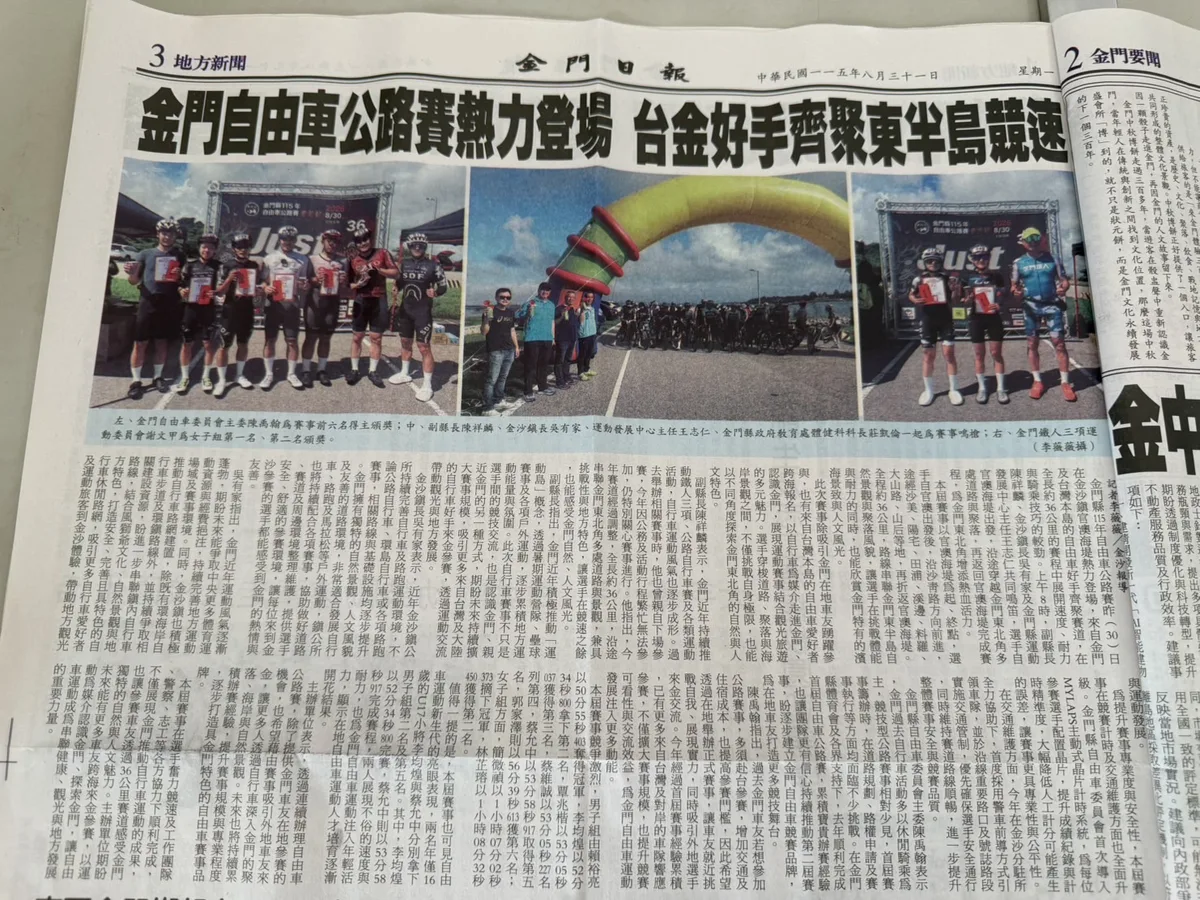
- 金門日報, 地方新聞(2026-08-31 第 3 版,金門自由車公路賽報導)
Rules and road conditions change — always check the official announcements before you travel.
Related guides
- Penghu Islands Cycling|Cross-Sea Bridge & Season
- TSA Songshan Airport Bike Pickup & Transfer
- Getting from Taoyuan Airport to the Ten-Day Traverse Start Line in Kaohsiung
Elsewhere in the ecosystem
- gear · Bike Maintenancereads your Strava mileage and works out when chains, tyres and pads are due
- siokiu · Group RidesTaiwanese for "let's go together", where local riders post routes and gather for weekend rides
Need a support vehicle?
Tell us your plan and we will suggest an option based on group size, bike count, and days.